
When more partnerships don't mean more protection
What if a country could have friends everywhere and still have no one willing to fight for it?
- Analysis
Trending
Analysis - -
By Beyond Headlines Desk
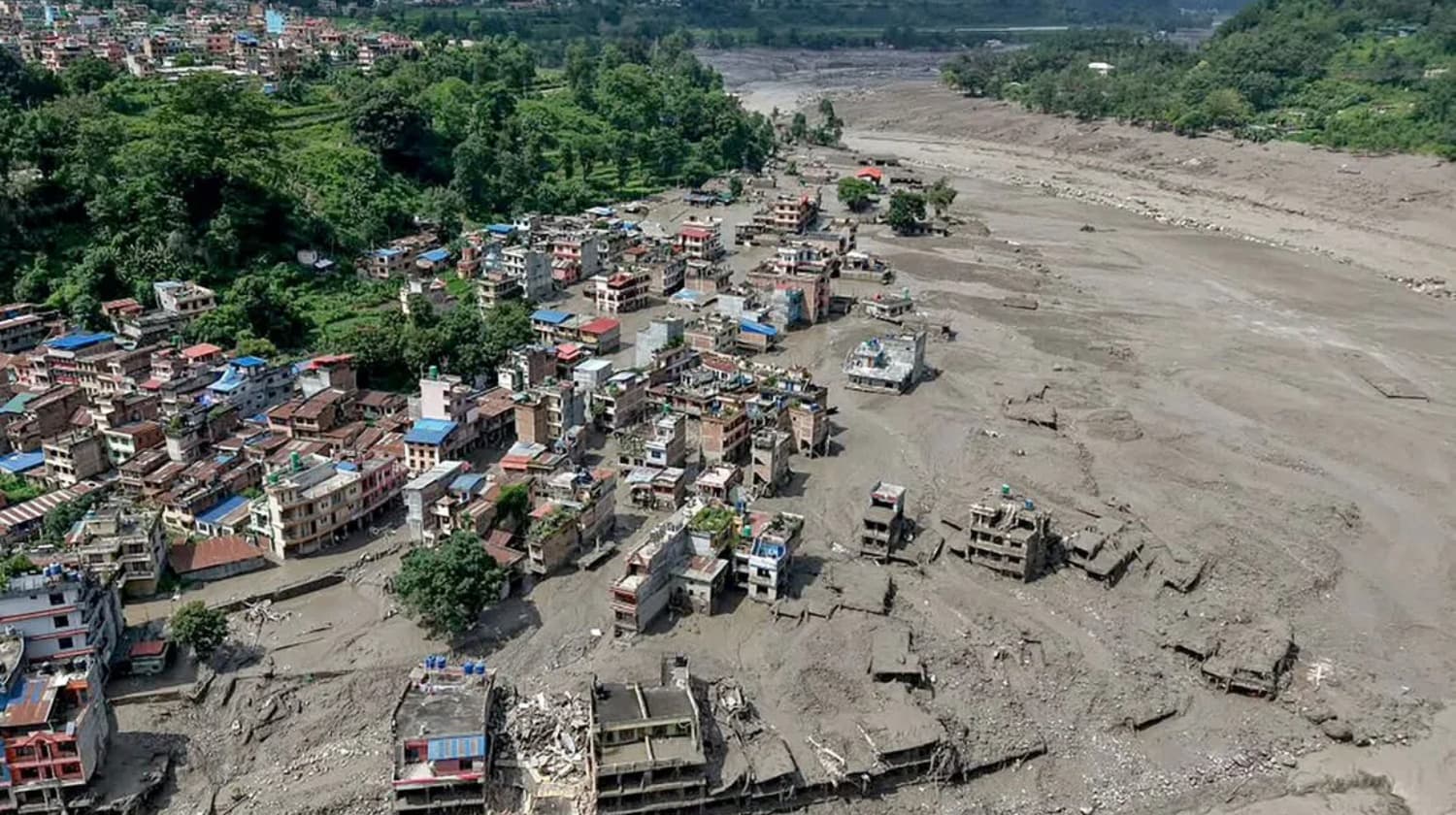
Earthquakes, floods, wildfires, droughts, landslides, tsunamis and volcanic eruptions seem to arrive one after another.
Scroll through the news on any given day, and there is a good chance that somewhere on the planet, something is burning, flooding, shaking, or collapsing.
It can leave us with an unsettling question: Is Earth becoming more dangerous?
The answer is complicated, and perhaps more interesting than a simple yes or no.
Some of the most terrifying forces we see on our screens are actually part of the Earth's ancient rhythm. Earthquakes happen because tectonic plates are constantly moving. Volcanoes erupt because the planet's interior remains hot and active. Tsunamis can follow undersea earthquakes and other geological disturbances.
None of that is new.
What has changed is the world around those natural processes and, increasingly, the climate in which many hazards occur.
The distinction matters.
In 2025, the Emergency Events Database (EM-DAT), maintained by the Centre for Research on the Epidemiology of Disasters, recorded 358 natural-hazard disasters around the world. They killed 16,607 people, affected 110.2 million, and caused an estimated $169.68 billion in economic losses.
Those numbers are staggering. But there is an important caveat: 2025 was not an exceptional year by every measure. EM-DAT says most of the year's indicators were below the 2005-2024 average, while the number of people affected by storms was higher. Overall, the organisation described the global disaster burden as broadly consistent with a typical year.
So perhaps the real question is not whether Earth suddenly became more violent. It is why disasters increasingly feel omnipresent and why some of them are becoming harder for societies to withstand.
Take earthquakes.
The planet's tectonic machinery has not suddenly switched into a higher gear. According to the US Geological Survey, temporary increases or decreases in earthquake activity are normal fluctuations, and there is no evidence that naturally occurring global earthquake activity is steadily increasing. Better instruments and faster communication also mean that we detect and hear about earthquakes much more quickly than we once did.
The two deadliest natural disasters recorded by EM-DAT in 2025 were earthquakes: a magnitude 7.7 earthquake in Myanmar that killed at least 3,820 people and a magnitude 6.0 earthquake in Afghanistan that killed an estimated 2,200.
The earthquakes themselves were not products of climate change.
But the damage they caused was shaped by something very human: where people live, how densely they live, the quality of buildings and infrastructure, and how prepared communities are for a sudden shock.
A natural hazard becomes a disaster when it collides with human vulnerability.
That distinction is crucial.
The more troubling changes are occurring closer to the surface.
Floods, storms, droughts, extreme heat, wildfires and some forms of landslides are being influenced by a warming climate. A warmer atmosphere can hold more moisture, intensify the water cycle and contribute to heavier rainfall in some circumstances. Rising temperatures can also increase evaporation and worsen drought in vulnerable regions, while heat can dry vegetation and increase wildfire risk.
The result is not that every individual disaster can simply be labelled “caused by climate change.”
The reality is more complicated.
Climate change can alter the frequency, intensity, duration, or conditions in which particular hazards occur, and it can make societies more vulnerable to their consequences.
The 2025 EM-DAT report provides plenty of examples.
A prolonged drought in Syria left 16.2 million people in need of assistance. A multiyear drought in the Horn of Africa left more than 6.5 million people in Somalia facing acute food insecurity. Pakistan experienced a series of floods during an intense monsoon season that killed more than 1,000 people and affected 6.9 million. Storms affected more than 30 million people in the Philippines during the year.
And then there are the disasters that unfold more slowly.
A river changes course. A coastline retreats. A farming community loses reliable access to water. A mountain slope becomes unstable. A forest becomes tinder-dry.
There may be no single dramatic moment when the disaster begins.
The landscape simply becomes less predictable.
For Bangladesh, this distinction is particularly important.
The country has always lived with floods, cyclones, river erosion and monsoon variability. None of these hazards was invented by climate change. But a changing climate can alter the conditions under which they occur.
Sea-level rise can increase the pressure on low-lying coastal areas. Heavier rainfall can intensify urban and river flooding. Rising temperatures can increase heat stress. Changes in rainfall and river flows can complicate agriculture and water management. Riverbank erosion can slowly erase a community without producing the spectacular images associated with an earthquake or cyclone.
So, is nature warning us?
Not in the mystical sense.
The Earth's core is not suddenly angry. Tectonic plates are not reacting emotionally to human activity. Earthquakes and volcanic eruptions remain part of the planet's long geological story.
But something else is happening.
Human beings have built enormous populations, cities, roads, farms and industries in places exposed to natural hazards. At the same time, we have changed the composition of the atmosphere and warmed the planet.
So we are watching two stories unfold simultaneously.
One is the old story of the Earth itself: tectonic plates moving, volcanoes erupting, and oceans responding to geological forces.
The other is a newer story: a rapidly changing climate interacting with an increasingly crowded and interconnected human world.
The first tells us that Earth has always been dynamic. The second tells us that our risk is changing.
And perhaps that is the message hidden beneath the daily barrage of disaster footage.
The question is not whether the Earth is becoming angry, rather it is whether we are becoming less prepared for the Earth we are creating and the climate we are changing.
The data cannot predict exactly where the next disaster will strike. But they can show us where vulnerability is accumulating, where climate risks are intensifying and where investment in stronger infrastructure, better planning, adaptation and resilience can save lives.
The planet is not sending us an omen. It is giving us evidence.
What if a country could have friends everywhere and still have no one willing to fight for it?
- Analysis