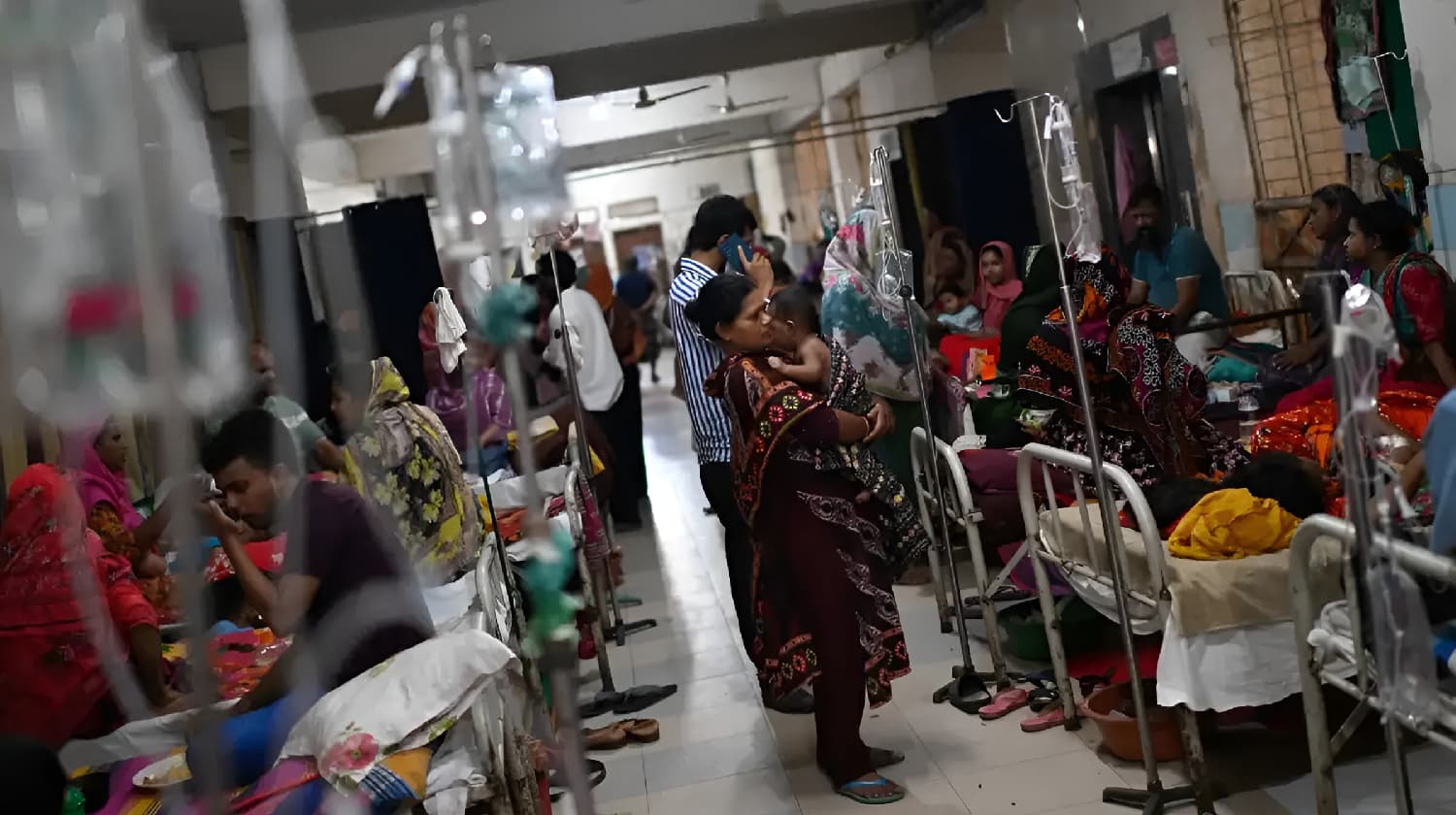
MEASLES OUTBREAK / A thousand children's deaths and counting… When will it stop?
Almost every day, we wake up to the news of another child lost to measles or measles-like symptoms -- another name added to a toll that refuses to fall.
- Opinion
Trending
Opinion - -
Illustration: Beyond Headlines
Another month, another grim tally.
At least 481 people were killed and 664 injured in 513 road crashes across Bangladesh in August, according to the Road Safety Foundation (RSF).
All three figures rose from July, when the advocacy and research organisation recorded 416 deaths and 629 injuries in 458 crashes. The numbers in July were almost identical to those reported in June.
These numbers barely shock us anymore. Deaths in road crashes have become so routine that they rarely spark outrage -- just a resigned scroll past the headline.
For decades, successive governments have pledged to bring order to the country’s roads. Laws have been amended, new agencies formed and awareness campaigns launched, one after another. Yet the roads remain stubbornly unsafe.
Every day, newspapers and television channels carry essentially the same story, with different names: people dying on the roads.
The causes are well known: reckless driving, dilapidated roads, weak enforcement of traffic laws, unfit vehicles, unqualified drivers and their excessively long duty hours. Unregulated transport syndicates operate with impunity while political influence often shields wrongdoers from the law. The result is a culture where death is routine and responsibility is elusive.
The causes are well known: reckless driving, dilapidated roads, weak enforcement of traffic laws, unfit vehicles, unqualified drivers and their excessively long duty hours. Unregulated transport syndicates operate with impunity while political influence often shields wrongdoers from the law.
The result is a culture where death is routine and responsibility is elusive.
Behind every fatal crash lies a long trail of negligence. Vehicles that should never pass fitness tests are cleared, sometimes through bribes. Drivers without proper training or valid licences are hired because they come cheap. Traffic rules are flouted openly.
Political patronage extended to transport owners' associations -- whose leadership changes with every change of government -- also means that even when lives are lost, accountability is rare.
The 2018 student movement for road safety briefly forced the nation to confront this culture of impunity. For a moment, it seemed that change was coming. The government promised stricter enforcement, modern traffic management systems and a new road transport law.
The law did come, but its implementation remains frustratingly weak. The same unfit buses and reckless drivers are back on the roads, as if little has changed.
The reasons are not hard to find.
Governance in the transport sector is fragmented among multiple agencies, with overlapping responsibilities and limited coordination. The Bangladesh Road Transport Authority (BRTA), tasked with issuing driving licences and fitness certificates, struggles with limited manpower and, at times, allegations of corruption.
Police enforcement is often inconsistent, focused on short-term drives rather than sustained vigilance. Meanwhile, powerful transport syndicates continue to resist reform, often arguing that stricter rules will "hurt livelihoods", a claim rarely challenged.
This vicious cycle thrives on a lack of accountability. When major accidents occur, authorities form committees, issue statements and move on. Rarely do we see comprehensive follow-up, meaningful institutional reform or prosecution of those responsible.
If we are to break this cycle, we have to first accept that road safety is a governance issue. It deserves the same seriousness as health, education, or national security, because it too is about saving lives.
At its core, good governance means fairness, transparency and accountability. None of these qualities adequately define the way our roads are managed today. Instead, we see a system in which transport syndicate can operate above the law while ordinary citizens pay the price -- sometimes with their lives.
It is time for a fundamental shift in how we view road safety: not as an occasional problem to be managed through ad hoc drives and temporary measures, but as a long-term governance challenge requiring sustained attention, resources and accountability.
It is time for a fundamental shift in how we view road safety: not as an occasional problem to be managed through ad hoc drives and temporary measures, but as a long-term governance challenge requiring sustained attention, resources and accountability.
The crash figures we see every month are not just numbers. They are lives lost, families torn apart and futures stolen. More importantly, they are a measure of how poorly the state is performing one of its most basic responsibilities: keeping its citizens safe.
So, the question is no longer whether we know what is causing these deaths. The real question is why, despite knowing the causes for years, we have failed to fix them.
And until those responsible for managing our roads are held accountable, another month will bring another grim tally.