Nepal and Tibet are reeling from the shock and devastation a day after catastrophic flooding and landslides along their shared border unleashed torrents of water and debris, killing at least 289 people and leaving hundreds of others, including foreign tourists, missing.
Authorities said on Thursday that nearly 1,500 people, including at least 800 foreigners, were missing across Nepal and China’s Tibet region. The death toll is expected to rise.
The disaster struck the mountainous Himalayan border region of Nepal and Tibet on Wednesday morning, with some of the worst damage reported in Nepal's Rasuwa district, just south of the border.
Rescuers continued searching for survivors and delivering emergency supplies to thousands stranded in remote mountain villages cut off by the floods. Offers of aid and assistance poured in as the scale of the disaster became clearer.
Photo: European Photo Association
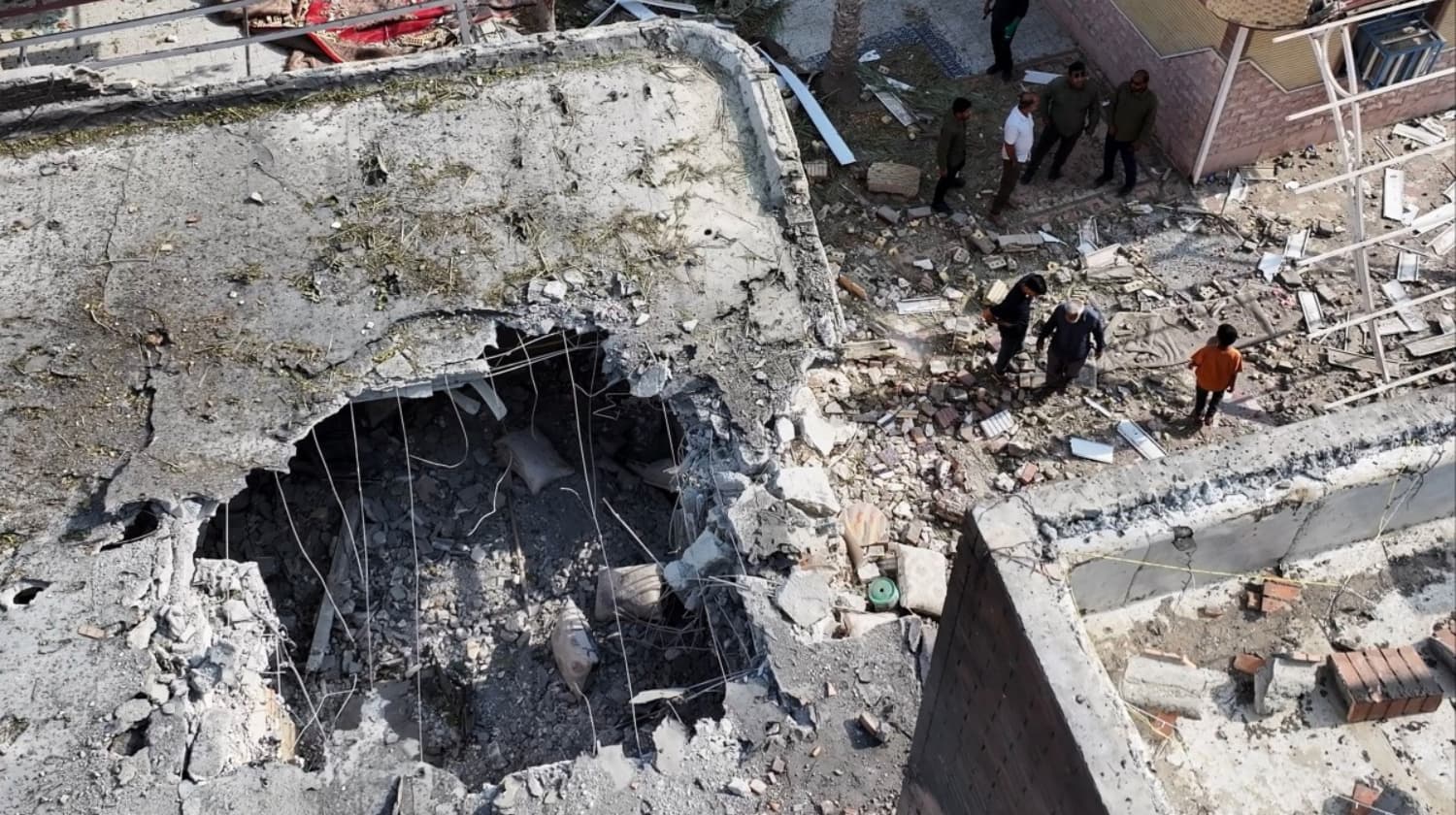
Shocking footage from the Gyirong border post, which links Nepal and Tibet, showed crowds fleeing as a wall of mud and rock crashed downstream on both sides of the border, sending floodwaters tearing through towns and valleys, flattening buildings and sweeping away rows of parked buses.
So what triggered a disaster this deadly?
The exact cause of the disaster, which has evolved since it struck, is not yet certain but appears to be linked to a collapsing glacier. Experts say the region’s extreme terrain can magnify the risks of such events.
However, Nepal’s Foreign Minister Shishir Khanal, within hours of the flooding, said an earthquake had been reported along the border shortly before the landslide.
China also reported a landslide, saying a border hub between Tibet and Nepal had been hit by a surge of debris.
The United States Geological Survey initially reported the event as a magnitude 4.4 earthquake. It later revised its assessment, saying that “additional analysis of long-period seismic waves indicates that the seismic energy was instead generated by a glacial collapse and debris flow” that “caused subsequent catastrophic impacts downstream”.
The United States Geological Survey initially reported the event as a magnitude 4.4 earthquake.
It later revised its assessment, saying that “additional analysis of long-period seismic waves indicates that the seismic energy was instead generated by a glacial collapse and debris flow” that “caused subsequent catastrophic impacts downstream”.
The event was recorded at magnitude 5.2, reflecting seismic energy generated by the collapse and the resulting impact, rather than an earthquake caused by underground tectonic movement.
The collapse unleashed a massive surge of water, mud, rock and ice that thundered down the valleys, sweeping through the Lhende Khola, Bhote Koshi and Trishuli rivers.
Photo: Reuters
Officials were caught off guard, local news reports said, since there had been no rainfall to signal the coming disaster.
The New York Times reported that the disaster may have been triggered by the collapse of a massive chunk of a glacier.
Daniel Shugar, a geologist at the University of Calgary, told the US daily, citing satellite imagery, that a section of a glacier roughly 2,000 feet wide broke off at an altitude of about 17,000 feet and plunged nearly 4,000 feet into the valley below.
“It looks like a glacier in the area basically snapped off in a clean break, allowing it to fall just over a vertical kilometer to the valley bottom,” he said.
Known as an ice avalanche, the event sent ice and water cascading into the valley.
However, scientists cautioned that it was too early to determine the precise cause of the flooding or rule out other contributing factors.
Simon Cook, a glaciologist at the University of Dundee in Scotland who analysed satellite imagery with Shugar, told The New York Times that the large mass of ice stored at high altitude would have had enormous potential energy as it fell.
When the ice broke off, he said, the sheer force of the drop pounded it into a dangerous, fast-moving mixture.
“That ice just gets pulverized into water,” Cook said.
The glacier break occurred about 40 miles north of Kathmandu, according to the researchers’ analysis. The resulting flow moved northwest through the valley towards the Bhotekoshi River, along the border between Nepal and the Chinese territory of Tibet.
Cook said the event was similar to a 2021 glacier collapse in India's Uttarakhand state that caused major flooding and killed more than 100 people.
DID CLIMATE CHANGE PLAY ANY ROLE?
Scientists are still investigating what triggered the glacier collapse, and it is too early to determine how much climate change contributed to this specific event.
However, the disaster comes against a backdrop of rapid warming and glacial loss across the Himalayas.
Glaciers across the Hindu Kush Himalaya mountain range -- which spans Afghanistan, Bangladesh, Bhutan, China, India, Myanmar, Nepal and Pakistan -- lost ice 65 percent faster between 2011 and 2020 than during the previous decade, Al Jazeera reported.
Photo: European Photo Association
Nepal’s glaciers have lost close to one-third of their ice volume in roughly three decades.
As glaciers retreat, mountain slopes can become increasingly unstable, and meltwater can accumulate in or around glaciers, increasing the potential for sudden floods.
Researchers are investigating whether melting contributed to the glacier’s instability, but a direct link between climate change and this week’s collapse has not been established.
Nepal is prone to glacial lake outburst floods (GLOFs) -- the sudden and catastrophic release of vast volumes of water from melting glacier-fed lakes.
One such disaster in July 2025 began in China’s Gyirong County before surging into Nepal’s Rasuwa District. Authorities, however, have not yet confirmed whether the latest calamity was caused by a GLOF.
Dorothy Heinrich, a researcher at the UK's University of Reading, told France 24 that GLOFs were among the hazards posed by a warming planet in the region.
"We do know what climate change trends look like in the Himalayas. There is high confidence of more heat waves, glacial retreat, permafrost reduction, these sorts of things that can drive things like landslides and glacial outburst floods," she said.
Related Posts
NO ROOM TO SPARE / DENGUE SURGE OVERWHELMS KHULNA HOSPITALS
Walk into hospitals across Bangladesh’s Khulna division, and you will find patients lying on the floor, sitting on mats, and waiting in crowded corridors. Their only hope is to find a bed and get treatment.
- Feature
Does Waymo have its own definition of ‘safe’?
America’s streets are being taken over by self-driving robotaxis operated by Waymo, which claims they are safer than human drivers. But what does “safe” actually mean to them?
- Feature
VIDEO / Shelling turns Iranian wedding into nightmare
What began as a wedding celebration in southern Iran ended in devastation after a reported US strike hit a residential area in Kuhestak, in Sirik County, killing civilians and injuring dozens as fighting between Washington and Tehran escalated once again.
- Feature
Argentina’s Messi chapter now comes to a close
Lionel Messi was at the centre of Argentina’s football story for more than two decades, and now his story has reached its final chapter.
- Feature
More From This Reporter
- Analysis
Earth isn't getting angrier. So why does it feel that way?
- Opinion
MEASLES OUTBREAK / A thousand children's deaths and counting… When will it stop?