America’s streets are no longer just for human drivers. Waymo, born out of Google’s self-driving project, now runs the country’s largest robotaxi fleet – cars that promise a driver who never gets tired, angry, or distracted.
Launched in 2009 as Google’s Self-Driving Car Project, it spun off as an independent company in 2016. With more than 20 million rides logged and approvals to expand across California, the company is now pitching its robotaxis as the future of urban transport.
The technology behind them is impressive. Waymo’s Driver combines LiDAR, radar, cameras and artificial intelligence to read the road, anticipate hazards and steer through traffic without anyone behind the wheel.
The ambition is even bigger: take the most unpredictable part of driving -- the human being -- out of the equation and make roads safer. There is evidence that it can work.
Waymo says its vehicles are involved in far fewer injury-causing crashes than human-driven cars. The company currently operates in 14 US cities and reports a 93 percent rider satisfaction rate.
But as the cars become more common, another question is becoming harder to ignore: What exactly counts as “safe” when the driver is a machine?
The question is no longer theoretical.
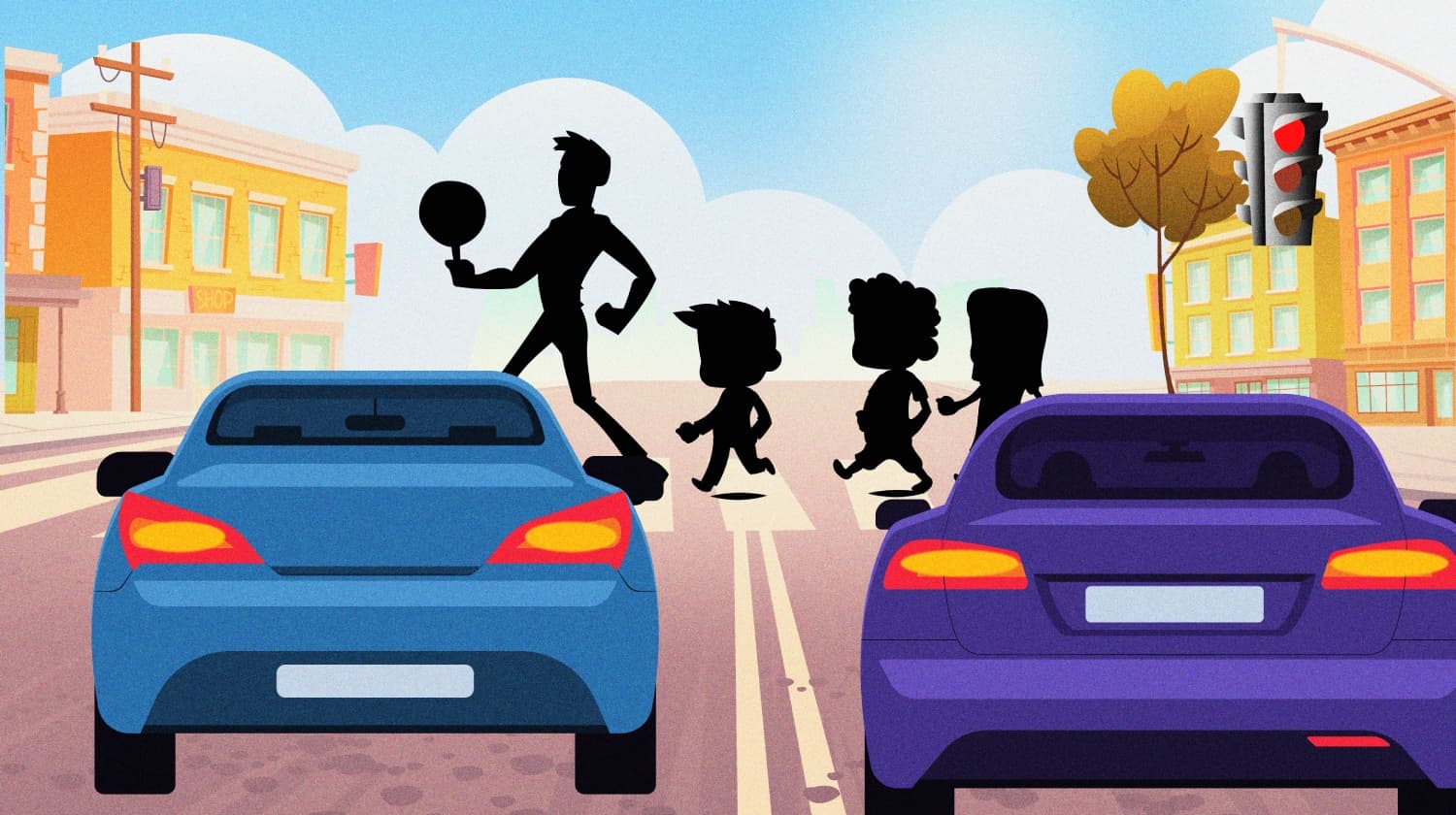
In Austin, Waymo vehicles have repeatedly passed stopped school buses with flashing lights and deployed stop-arms since the school year began, moments after children crossed the road. The Austin Independent School District asked the company to pause operations during school pick-up and drop-off.
Waymo never replied.
San Bruno police posted a photo of a Waymo and a dilemma, writing: ‘Since there was no human driver, a ticket couldn’t be issued.’ Photograph: San Bruno Police Department via The Guardian
In San Francisco, firefighters say they increasingly encounter robotaxis interfering with emergency responses. Police records show Waymos being used by criminals as getaway vehicles. In March, one blocked an ambulance during a mass-shooting response.
Then there are the stranger failures: robotaxis wandering into flooded streets, turning up at crime scenes, or stopping in places where they obstruct traffic.
Individually, such incidents may look like glitches. Taken together, they raise a more uncomfortable question about autonomous driving: how should society judge a machine that is statistically safer but occasionally behaves in ways a human driver would immediately recognise as dangerous?
Waymo's answer has been consistent.
The company points to its safety record, saying its vehicles have 12 times fewer crashes involving pedestrian injuries than comparable human-driving benchmarks.
That may be an important achievement. But it doesn't necessarily settle the argument.
Consider what happens when the numbers themselves are difficult to independently scrutinise.
For years, California's Department of Motor Vehicles published crash information that helped show whether a human driver or an autonomous system was considered responsible for an incident. Between 2014 and 2019, those records attributed fault to human drivers in 82 percent of reported crashes.
Then the practice stopped.
For almost seven years, the public had far less visibility into one of the most basic questions surrounding autonomous vehicles: when something goes wrong, who -- or what -- was actually at fault?
There were attempts to restore greater transparency. A bill introduced in 2024 stalled. New rules adopted in 2026 expanded the reporting requirements, but did not restore the simple fault designation that would allow the public to make straightforward comparisons.
At the same time, some incidents in which human drivers had to take control from autonomous systems were excluded from the reporting framework after industry lobbying and regulatory changes.
The DMV argues that its newer measures provide a more precise picture of safety.
Perhaps they do.
But this is where the Waymo services become less about a robotaxi and more about a problem that follows every disruptive technology: the technology can move faster than the rules designed to measure it.
Waymo's statistics may well be accurate. The company may genuinely be much safer than human drivers on many of the measures that matter most. But a low crash rate does not answer every question.
What happens when a robotaxi blocks an ambulance? When it fails to recognise a school bus? When a passenger or pedestrian has to intervene? When the car encounters a situation its programmers did not anticipate?
And perhaps most importantly, who gets to decide whether those events are evidence of an unsafe system or simply the unavoidable imperfections of a technology still learning how to navigate the real world?
That is why the debate over Waymo cannot be reduced to a tally of crashes.
Human drivers make mistakes. They speed, text, drink, become distracted and lose their temper. Autonomous vehicles eliminate many of those risks. Any honest assessment has to account for that enormous advantage.
But humans also possess something machines still struggle with: judgement in situations that were never explicitly programmed.
A human approaching a school bus, an emergency scene or a confused pedestrian can understand the context almost instantly. A machine has to interpret it from data.
And when that interpretation goes wrong, the consequences can be difficult to predict.
The real test for Waymo is not whether it can drive a car around a city. It clearly can.
It is whether a machine can be trusted to make the thousands of small judgements that human drivers make every day and whether regulators, researchers and the public have enough independent information to know when it fails.
That distinction matters.
Because the future of autonomous driving may not ultimately be decided by whether robotaxis are safer than humans. It may be decided by whether we can prove that they are.
Related Posts
NO ROOM TO SPARE / DENGUE SURGE OVERWHELMS KHULNA HOSPITALS
Walk into hospitals across Bangladesh’s Khulna division, and you will find patients lying on the floor, sitting on mats, and waiting in crowded corridors. Their only hope is to find a bed and get treatment.
- Feature
VIDEO / Shelling turns Iranian wedding into nightmare
What began as a wedding celebration in southern Iran ended in devastation after a reported US strike hit a residential area in Kuhestak, in Sirik County, killing civilians and injuring dozens as fighting between Washington and Tehran escalated once again.
- Feature
Argentina’s Messi chapter now comes to a close
Lionel Messi was at the centre of Argentina’s football story for more than two decades, and now his story has reached its final chapter.
- Feature
Inside the world’s first successful AI-assisted neurosurgery
A surgical team at University College London Hospital has conducted the world’s first successful live AI-assisted brain tumour removal with clinicians.
- Feature
More From This Reporter
- Analysis
Earth isn't getting angrier. So why does it feel that way?
- Opinion
MEASLES OUTBREAK / A thousand children's deaths and counting… When will it stop?
- Analysis
When more partnerships don't mean more protection
- Opinion
A road safety crisis we refuse to fix
- Feature
Video / What caused the deadly Nepal-Tibet disaster?