
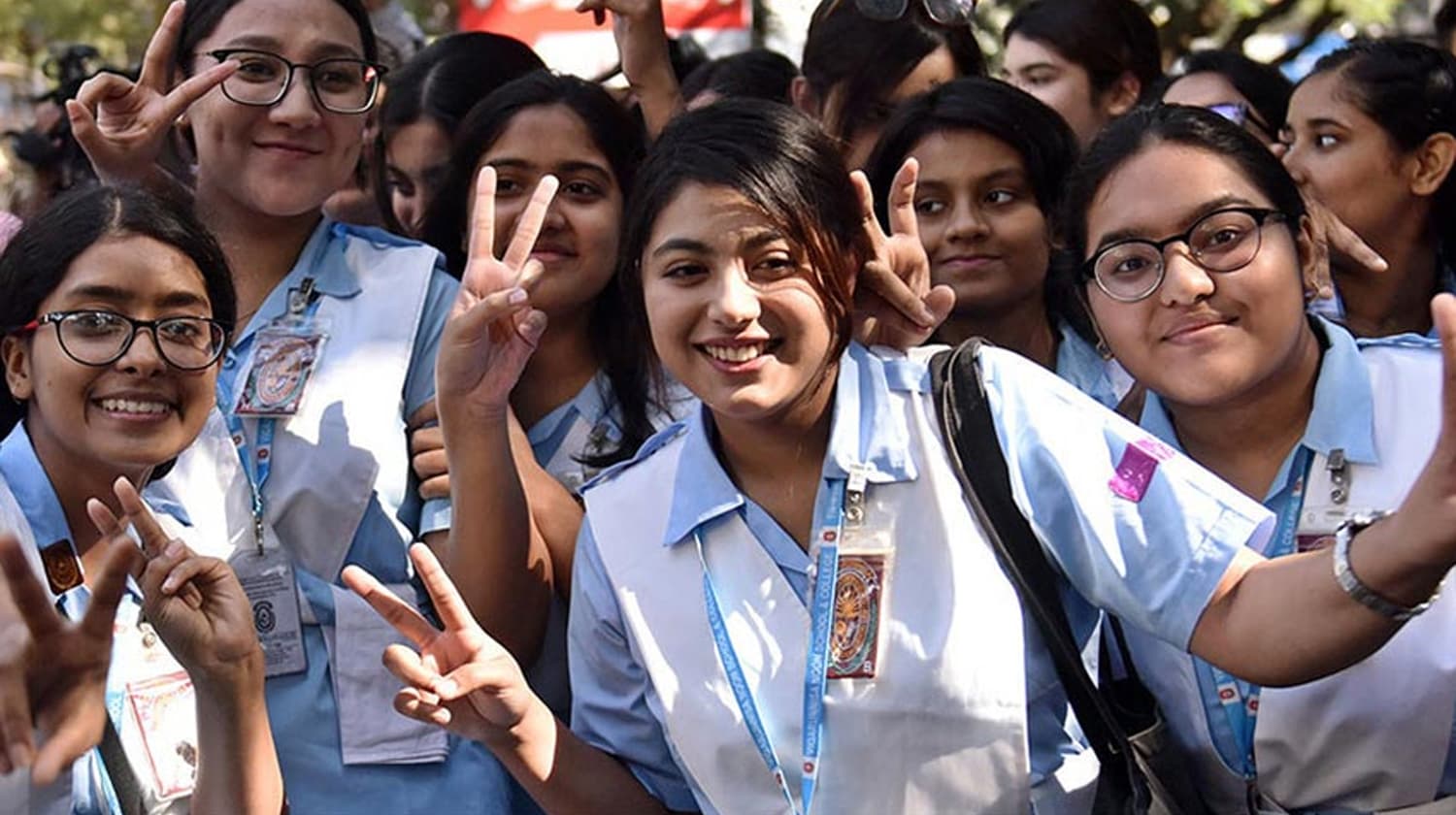
HSC Result 2026: How to check results?
HSC results 2026 will be released on 31 October for 1.27 million candidates. Learn how to check Bangladesh education results online and by SMS via official channels.
- Feature
Trending
Feature - -
Graphics: Beyond Headlines
As Bangladesh prepared to celebrate the 25th anniversary of its independence at six o’clock on the morning of March 26, 1996, the lights were still on inside the chamber of the Jatiya Sangsad.
Lawmakers had spent the entire night arguing and searching for a way out of a political crisis that had paralysed the country’s democratic process. Outside parliament, months of protests, hartals and political confrontation had brought the country to the brink.
Then came the announcement.
The Speaker declared that parliament had passed the 13th Amendment to the Constitution, paving the way for a non-party caretaker government to oversee national elections.
For many, it felt like a breakthrough. After years of distrust between political rivals, Bangladesh had finally established a constitutional mechanism designed to ensure that elections would not be conducted under the control of the party in power.
Three decades later, that experiment continues to shape the country’s politics.
The caretaker government system has lived many lives. Born out of the anti-autocracy movement of the 1980s, it was incorporated into the Constitution in 1996 after a fierce political confrontation, abolished in 2011 despite opposition protests, and revived through a Supreme Court verdict in the aftermath of the 2024 mass uprising.
Its turbulent journey mirrors Bangladesh’s own struggle with a persistent question: Who can be trusted to conduct an election?
Since independence, Bangladesh has held 13 parliamentary elections. Yet one pattern stands out: no incumbent government has ever been voted out of office in an election conducted under its own administration.
The picture looks markedly different when elections have been held under caretaker or interim administrations. The elections of 1991, June 1996, 2001, 2008 and 2026 resulted in peaceful transfers of power or the defeat of incumbents. These elections were generally considered more credible and acceptable across the political spectrum.
By contrast, several elections held under incumbent governments became mired in controversy. The elections of 1986, 1988, February 1996, 2014 and 2024 were boycotted by major opposition parties. The 2018 election, too, faced widespread criticism over its competitiveness and credibility.
BORN ON THE STREETS
The story began long before the dramatic events of March 1996.
During the 1980s, opposition parties fighting the military-backed rule of HM Ershad increasingly argued that elections under an autocracy could never be credible. Their demand gradually evolved into a political doctrine: elections must be held under a neutral authority.
The idea gained historic significance in November 1990, when three major opposition alliances united against Ershad. Their joint declaration, popularly known as the Tin Joter Ruprekha (Three-Alliance Outline), pledged that they would neither participate in nor recognise elections conducted under the military ruler. Instead, they would take part in an election only under a non-partisan caretaker administration, which they argued was the sole arrangement capable of guaranteeing a meaningful vote.
Within weeks, the Ershad regime collapsed.
Bangladesh’s first experiment with a neutral transitional administration followed almost immediately, with Chief Justice Shahabuddin Ahmed heading an interim government that oversaw the 1991 election.
The arrangement had no constitutional basis, and at the time, it did not need one. The public and political parties accepted it, and the election produced a peaceful transfer of power. For a brief moment, electoral trust seemed possible.
But that trust would once again prove fragile.
WHEN MAGURA CHANGED EVERYTHING
The turning point came in 1994.
Allegations of large-scale irregularities in the Magura by-election reopened wounds that many believed had healed following the restoration of parliamentary democracy.
The then-opposition, led by the Awami League, accused the BNP government of manipulating the electoral process. Parliament became increasingly dysfunctional as opposition lawmakers staged boycotts, while the streets turned into battlegrounds of hartals and demonstrations. The confrontation intensified on December 28, 1994, when 147 opposition MPs resigned en masse.
The BNP government initially resisted the demand for a caretaker administration. The February 15, 1996 election went ahead without the participation of major opposition parties, producing a parliament whose legitimacy was immediately questioned.
The political deadlock soon became unsustainable.
In the third week of March, the short-lived parliament sat through the night and passed the 13th Amendment to the Constitution on the morning of March 26, formally establishing the caretaker government system.
What had begun as a political demand on the streets was now part of the country’s constitutional framework.
AS THE SOLUTION BECAME THE PROBLEM
For a decade, the arrangement appeared to work.
The elections of June 1996 and 2001 were comparatively peaceful under caretaker administrations led by Justice Habibur Rahman and Justice Latifur Rahman, respectively. Winning parties assumed office through a process broadly recognised as legitimate.
The system’s credibility appeared secure. Yet it contained a fundamental weakness: the success of a supposedly neutral government depended on political agreement over who was genuinely neutral.
That weakness erupted into a crisis in late 2006.
As the BNP government’s tenure came to an end, political parties became locked in a bitter dispute over who should lead the next caretaker administration. The constitutional formula broke down, protests spread, and violence escalated.
Eventually, President Iajuddin Ahmed declared a state of emergency and cancelled the scheduled January 2007 election.
The caretaker system had been created to prevent electoral crises. Now, it had become the centre of one.
A new, military-backed caretaker government headed by Fakhruddin Ahmed remained in office for nearly two years before elections were finally held in December 2008.
SYSTEM DISAPPEARS, QUESTION REMAINS
In 2011, the Awami League government abolished the caretaker government system through the 15th Amendment to the Constitution, despite opposition protests. The government stated that the decision was taken in line with a Supreme Court ruling.
But removing the mechanism did not resolve the underlying dispute over electoral credibility. Instead, the argument returned in a different form.
Opposition parties continued to demand a neutral election-time administration. Elections held in 2014, 2018, and 2024 remained deeply contested, facing major questions over participation, competitiveness, and credibility.
Then came the events of 2024.
A student-led mass uprising brought Sheikh Hasina’s government to an end. An interim government led by Professor Muhammad Yunus took office and oversaw the February 12 election, providing another example of a credible poll conducted outside the authority of an incumbent elected government.
The caretaker government issue gained fresh momentum during discussions of the National Consensus Commission and subsequently received judicial backing when the Supreme Court revived the system's provisions in November 2025.
The latest ruling will apply prospectively. According to lawyers, this means caretaker governments will oversee polls beginning with the 14th national parliamentary election.
NEW FORMULA
Following extensive deliberations, political parties reached an agreement on restoring the caretaker government arrangement and establishing a more detailed process for selecting its chief adviser.
The July Charter also stipulates that any changes to the constitutional provisions governing the caretaker government system must be approved through a referendum, adding another layer of protection to an arrangement that has repeatedly been reshaped by political contestation.
Under the July Charter, a five-member panel will be formed to select the chief adviser from a pool of nominees. The panel will comprise the prime minister, the leader of the opposition, the Speaker, the Deputy Speaker from the opposition, and a representative of the second-largest opposition party.
The panel will invite political parties represented in parliament, parties registered with the Election Commission and independent MPs to propose candidates qualified to serve as chief adviser. Each political party and independent MP will be allowed to nominate only one person.
The committee will then deliberate on the proposed candidates, as well as individuals identified through its own enquiries. From among eligible citizens, one person will be selected as chief adviser and appointed by the president.
The July Charter also outlines further options should the first selection process fail.
Under the second option, the ruling party and the main opposition will each submit five nominees, while the second-largest opposition party will submit two.
The main opposition will select one nominee from the ruling party’s list, while the ruling party will select one from the main opposition’s list. They will also select one nominee from the list submitted by the second-largest opposition party.
At this stage, four of the five panel members must agree on the selection of a chief adviser from the shortlist.
If the second option also fails, two judges—one from the Appellate Division and one from the High Court Division—will join the panel. The resulting seven-member panel will select a chief adviser from the shortlisted candidates through a ranked-choice voting system.
Under this method, panel members will rank the candidates according to their preferences, assigning one point to their first choice, two points to their second choice, and so on.
If the panel still fails to select a nominee, the relevant provisions of the 13th Amendment to the Constitution will come into effect, with the condition that the president will be excluded from consideration.
Several parties, including the BNP, have submitted notes of dissent over the inclusion of judges in the selection panel and the use of ranked-choice voting. They have proposed that, if the second option fails, parliament should vote to select the chief adviser from the shortlist.
Meanwhile, the special parliamentary committee on constitutional affairs is working to prepare recommendations for constitutional changes and determine how the caretaker government system will be incorporated into the Constitution.
Following a meeting with broadcast journalists on September 29, committee chief and Home Minister Salahuddin Ahmed said the committee had yet to reach a decision on the framework of the caretaker government, including its composition and who would serve in it. He noted that the July Charter contained notes of dissent on certain aspects of the proposal.
He said the structure of the caretaker government and the form it should take required open discussion and further proposals. Parliament would ultimately consider whichever proposal was deemed most appropriate and acceptable.
The proposed safeguards may help prevent some of the failures of the past. But no selection formula can guarantee neutrality if political parties refuse to respect the process.
HSC results 2026 will be released on 31 October for 1.27 million candidates. Learn how to check Bangladesh education results online and by SMS via official channels.
- Feature

A year-long investigation by Al Jazeera and the Canadian cyber research group Citizen Lab has uncovered the first confirmed case of a zero-click spyware attack delivered through targeted digital advertising. It sounds alarming, but what exactly is a zero-click spyware attack, and how does it work?
- Feature